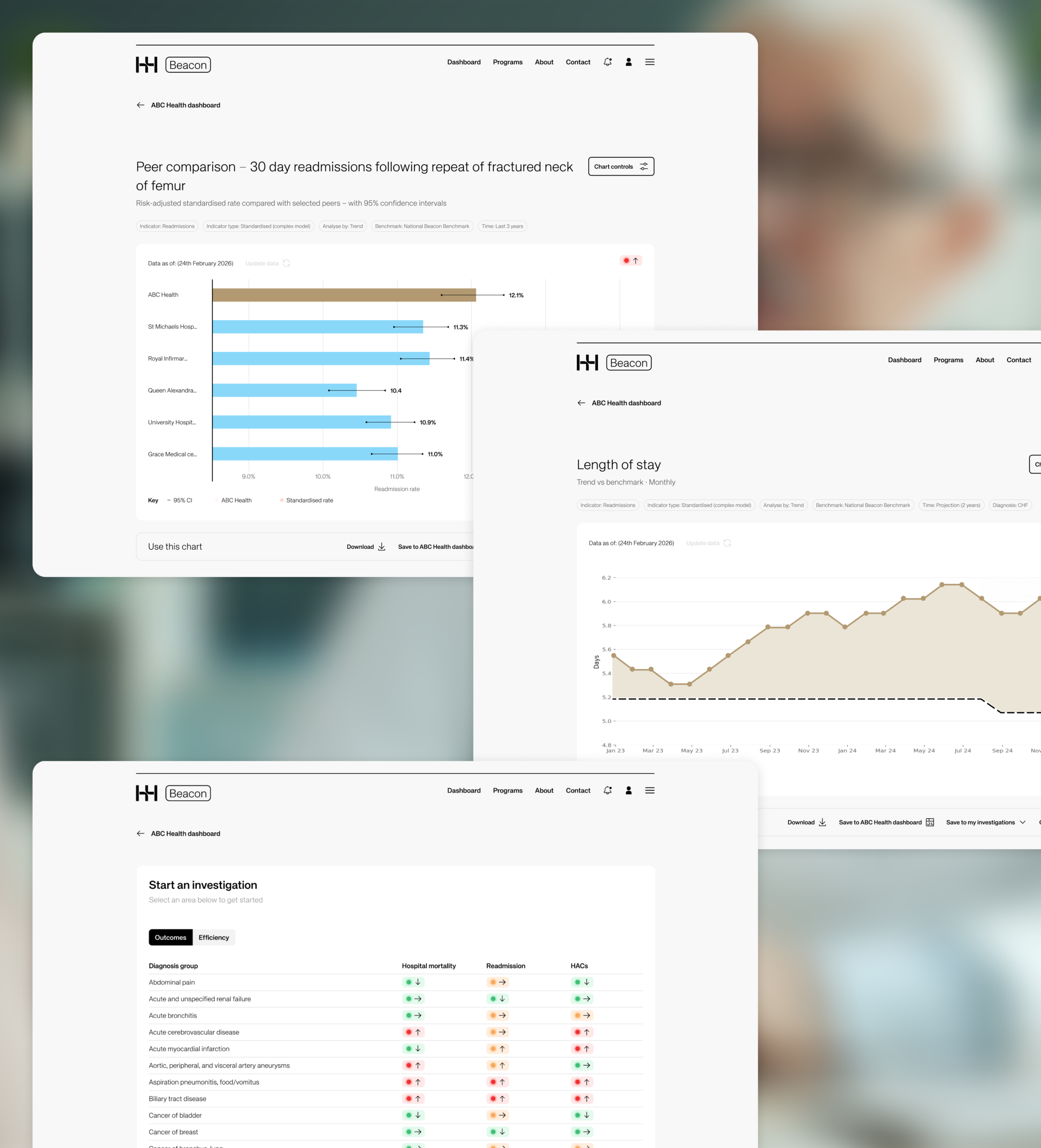
Studiomade were selected to design Beacon, a new digital platform launching this year that lets healthcare organisations measure how they truly perform against global peers, and, just as importantly, act on what they find. The challenge was to design a product experience that turns benchmarking data into shared understanding, confident decision-making and lasting organisational improvement that ultimately improves patient care.
The challenge
Healthcare leaders rarely struggle for data. The real challenge is to decide what is worth acting on, how to action it and how to sustain it. In discussions with Hunter we found the same recurring barriers across every C-suite role (CEO, CMO and CFO): a different read of the same numbers, uncertainty about whether weak performance was real or a misalignment in how similar organisations compare and improvement that faded once other priorities were taken on.
Beacon needed to:
- Provide a transparent and trustworthy read on organisational performance
- Help teams reach a single, shared understanding of what their data is saying
- Highlight key opportunities, helping leaders to know where to focus
- Turn insight into coordinated action rather than another report
- Help organisations sustain improvement through peers, programmes and tracking.
Our approach
We tackled the project with evidence-led design thinking, beginning with audit and strategy. Working with the Beacon product team to set out the personas and core use cases, we extracted the real goals and pain points behind each role, defined the user tiers, and established the brief around shared understanding, networking and action.
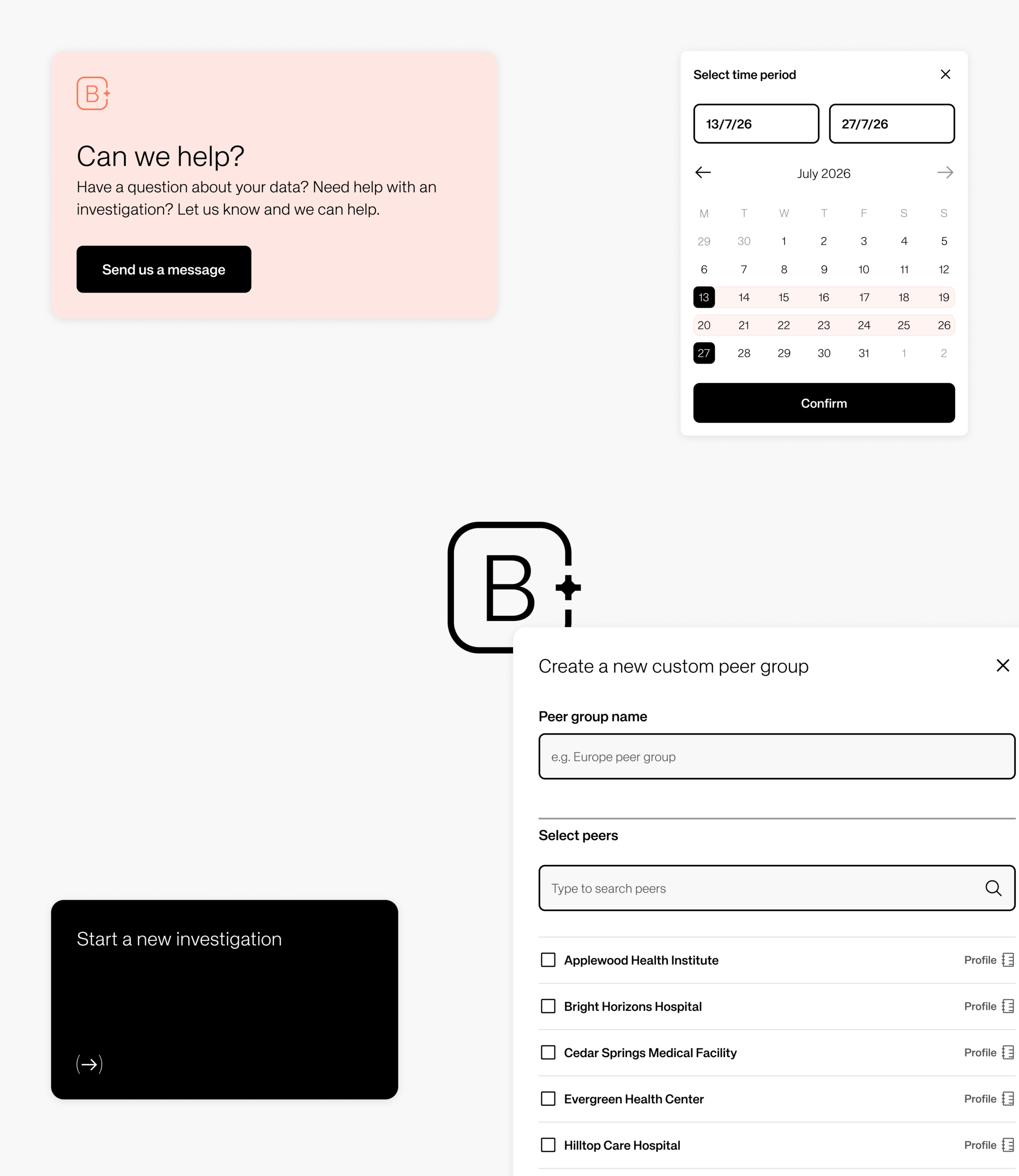
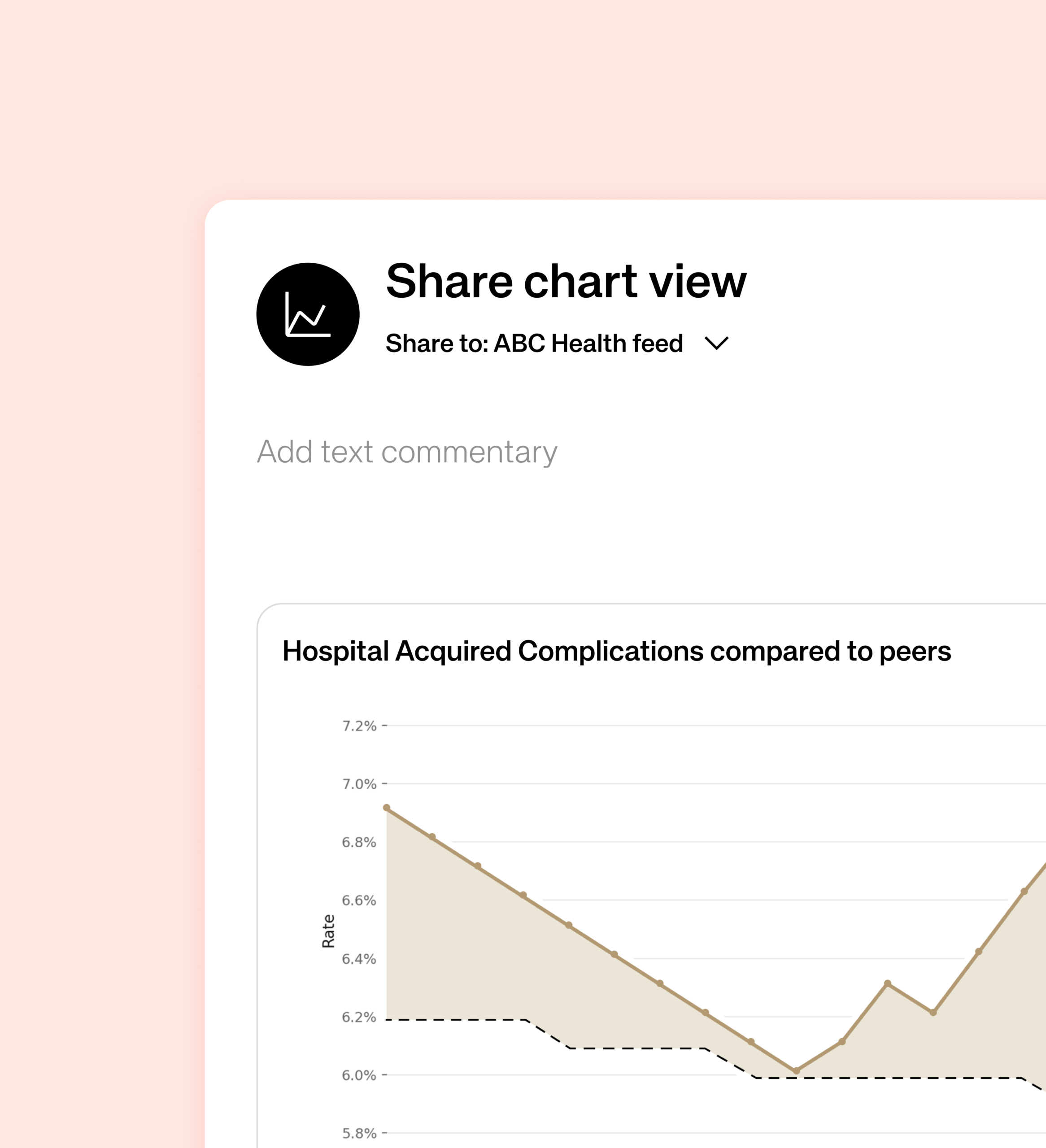
From there we moved into UX and information architecture, shaping the user journeys that mattered most: building an organisation dashboard, investigating an opportunity by drilling down from a headline metric to its underlying drivers, defining peer groups, and sharing a chart with colleagues. We designed Beacon’s data language around SPC charts with control limits, peer comparisons and clear trend signals. Our UI and prototyping phase then brought the direction to life as a quiet, consistent visual design system and an interactive prototype of the core flow, with ongoing feedback loops keeping every decision balanced against user needs, clinical credibility and technical feasibility. Everything is cleanly displayed, reducing visual noise and citing Beacon as a functional tool.
That direction is now in early development stages. We are validating the flows and the data narratives with real users, refining the points where meaning, navigation or trust break down before the product continues to be built at scale.
The outcome
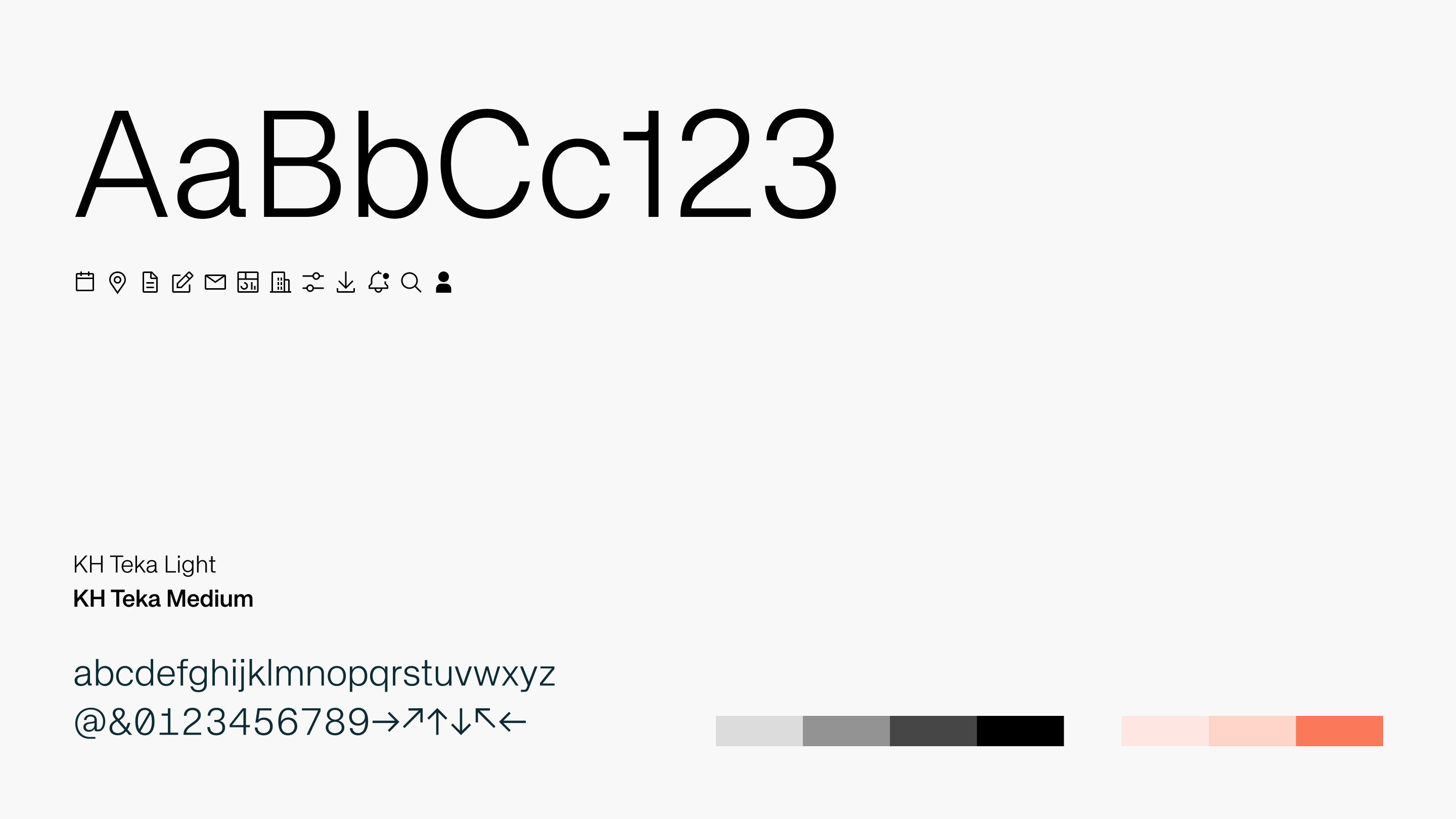
The Studiomade team delivered a designed product experience and UI design library for Beacon, using the existing Hunter Healthcare brand style as a starting point and extending it into a clearer digital product framework.
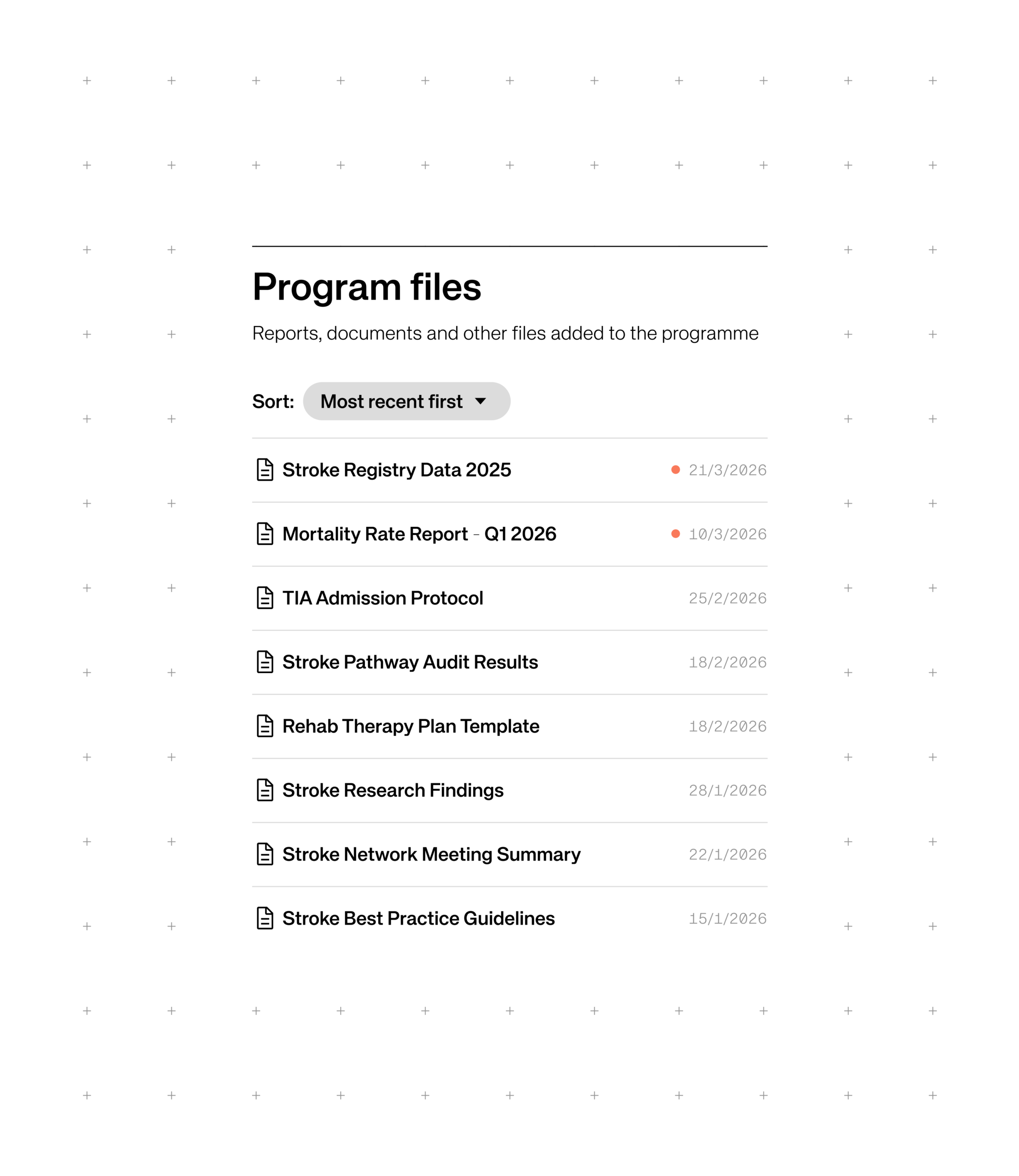
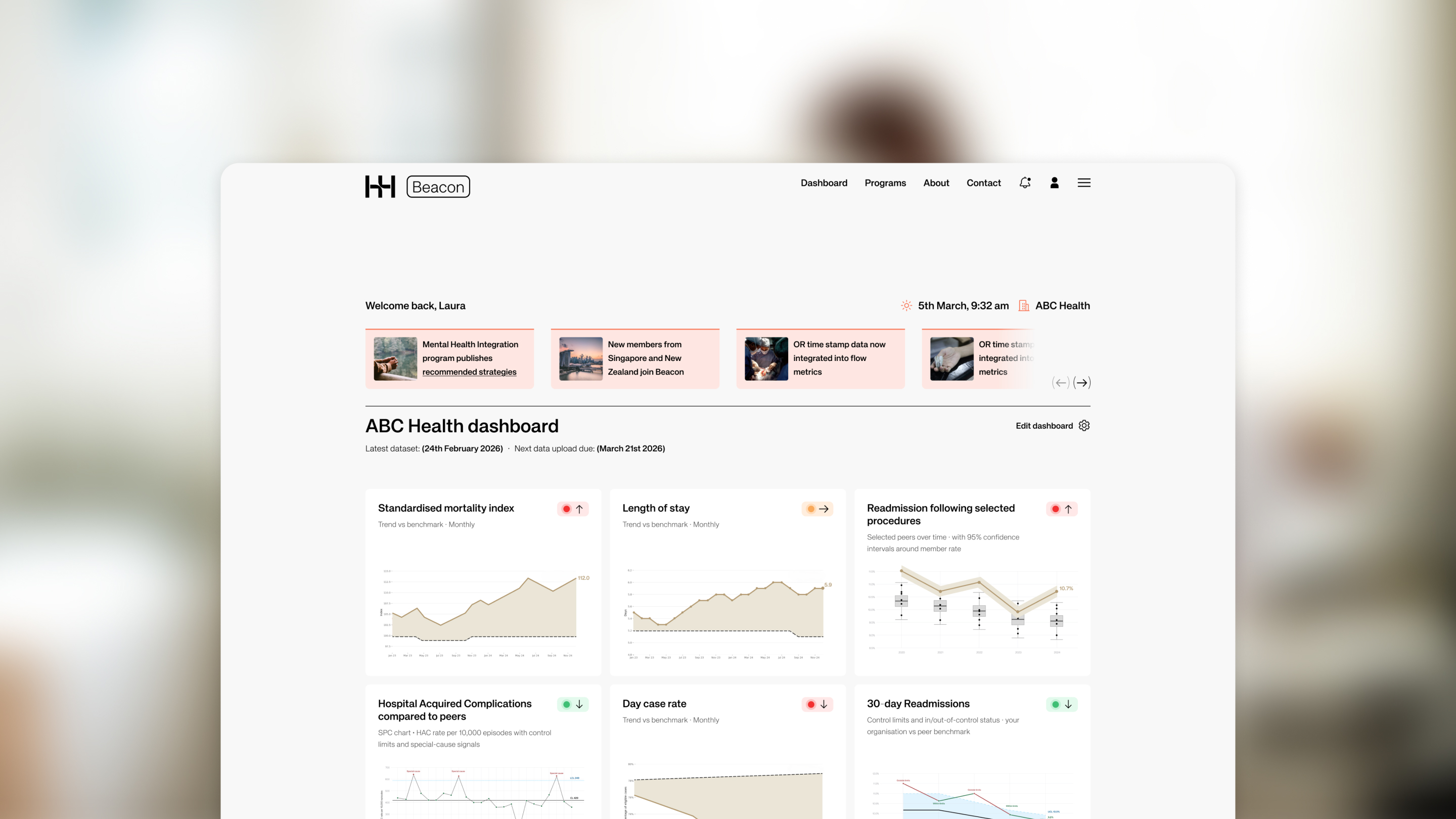
The prototype was shaped around three connected ideas. First, members can benchmark with confidence against global peers, using standardised models, clear caveats and the ability to move from a headline metric into the drivers behind it. Second, they can compare and connect, finding organisations performing well on the measures that matter to them and learning how progress was achieved through member pages, peer comparison and in-organisation sharing. Third, they can join funded, multi-year improvement programmes, such as High Value Stroke Care, where members pool data, research and implementation around a single topic, supported by shared analyses, an activity feed and a calendar of events.
All product designs and the underlying interface were delivered as a structured Figma component library – a system that not only enables swift development of Beacon, but can direct future digital product creation across Hunter Healthcare, applying the same validated approach to whatever comes next.
Impact
The result is a benchmarking experience that reads at a glance and earns user’s trust, with a clear route from a single metric through to peer comparison, drill-down and action. Peer connection and funded programmes help improvement stick over time, while a scalable design system and component library provides Hunter Healthcare a foundation both for the product build and for future development.