Building a modern alcohol brand: what we learned launching our own

Phil Reid
The consumer landscape continues to evolve at a staggering pace. The growth of ‘craft’ industries and global brands conceiving and developing new propositions at a ferocious rate mean consumers have more choice than ever. These changes are taking place across all markets, due in large part to the way businesses of all size are able to conduct sales and build a large brand presence online. In the drinks and alcohol industry, this market dynamic means brands need to take advantage of these unique opportunities and new challenges in order to succeed. We wrote about this shift back in 2019. Five years on, it’s only become more true, and in 2024 we decided to stop observing it from the outside and test it for ourselves.An increasing focus on health and wellness, sustainability, product quality, shorter product lifecycles, and a greater need for variety all are mounting pressures on modern brands to deliver successful products. Consumers take pride in, and to some extent, build their identities based on the brands that they buy. Because of this, they need to understand a brand’s purpose, its personality and what sets it apart before they’ll be willing to become a believer in a brand.
The rise in healthy thinking
Back in 2019, 19% of the UK adult population (10 million people) abstained from alcohol, and one third of adults were actively drinking less than the year before (MCA Healthier Eating Report 2019). Grand View Research predicted the global non-alcoholic beverage market would reach USD $1.6 trillion by 2025, a 30% increase on where it stood then. That prediction has broadly played out, and the direction of travel hasn’t changed since.
In a world where consumers have more power than ever, cutting through the noise, understanding their true needs and telling a compelling brand story is vital to staying ahead of competitors. Not only this, more consumers are now considering how the products they buy are produced, packaged and traded. The rise in B Corp, ethical brands and wholesome organisations built around the positive aspect of change is transcending historically staid industries.
Looking at the financial market for example, the growth of ESG fund investment (funds where environmental, social and governance factors have been integrated into the investment process) is, through affirmative government regulation, beginning to showcase the importance of not only investing in profitable funds (a given), but funds that have a direct impact to better the world around us.
Back to the drinks industry
Daniel Woolfson from The Grocer states that “a new, younger generation of consumers, with a taste for experimentation and no longstanding loyalty to big brands has come of age.” It goes without saying then that in this new wild west consumer world, brands large and small must work harder to ensure a better customer experience. Effectively communicating the benefits of a brand, pairing a consumer’s need to a specific product range and embracing design thinking to influence perception and a consumer’s brand relationship is vital.
A greater focus on health and wellbeing means that it is increasingly likely that people will be drinking less, and when they do drink, prioritise quality offerings. In addition to this, we are seeing a rise in non-traditional product introductions such as non-alcoholic beers that maintain a focus on flavour and a strong appeal to craft beer drinkers. Take a look at Hop Burns & Black’s No and Low Alcohol range to see what we mean.
With so many elements contributing to a successful brand, and more complex needs from consumers, we’d spent years advising clients on how to affect change quickly and communicate their brand’s strengths to an increasingly specific audience. We’d built those instincts helping other people’s brands: a wellbeing tool called Drinks Meter, built for the think tank Global Drugs Survey to help people track their alcohol consumption, and a fast-turnaround digital launch for a new vegan product with Unilever. Both taught us plenty. But in 2024, we decided to find out what the same thesis felt like from the inside, with our own commercial risk on the line, by launching a drinks brand of our own.
Turtle Roll Rum: putting the thesis to the test
Turtle Roll Rum came out of Unit 29 Ventures, an investment vehicle founded by Phil Reid, who is also Studiomade’s founder and Strategic Director. Unit 29’s first venture, back in 2020, was The Cove, a luxury florist and concept store in Royal Tunbridge Wells that built a loyal customer base around premium products from local independent makers and distillers. After two years, Phil decided it was time for Unit 29’s next venture: a unique, small batch rum, positioned exactly where the trend data above says the audience is heading, sustainable, values-led and unwilling to accept a generic offer just because it’s from a bigger name.
The name itself came from the sea. Before you can line up a wave when surfing, you have to get past the ones breaking around you first, the manoeuvre for that is called a turtle roll. It felt right for a brand’s first step into an entirely new industry, and for the ethos behind it: a small, ethically produced rum trying to do some good for the ocean it’s named after.
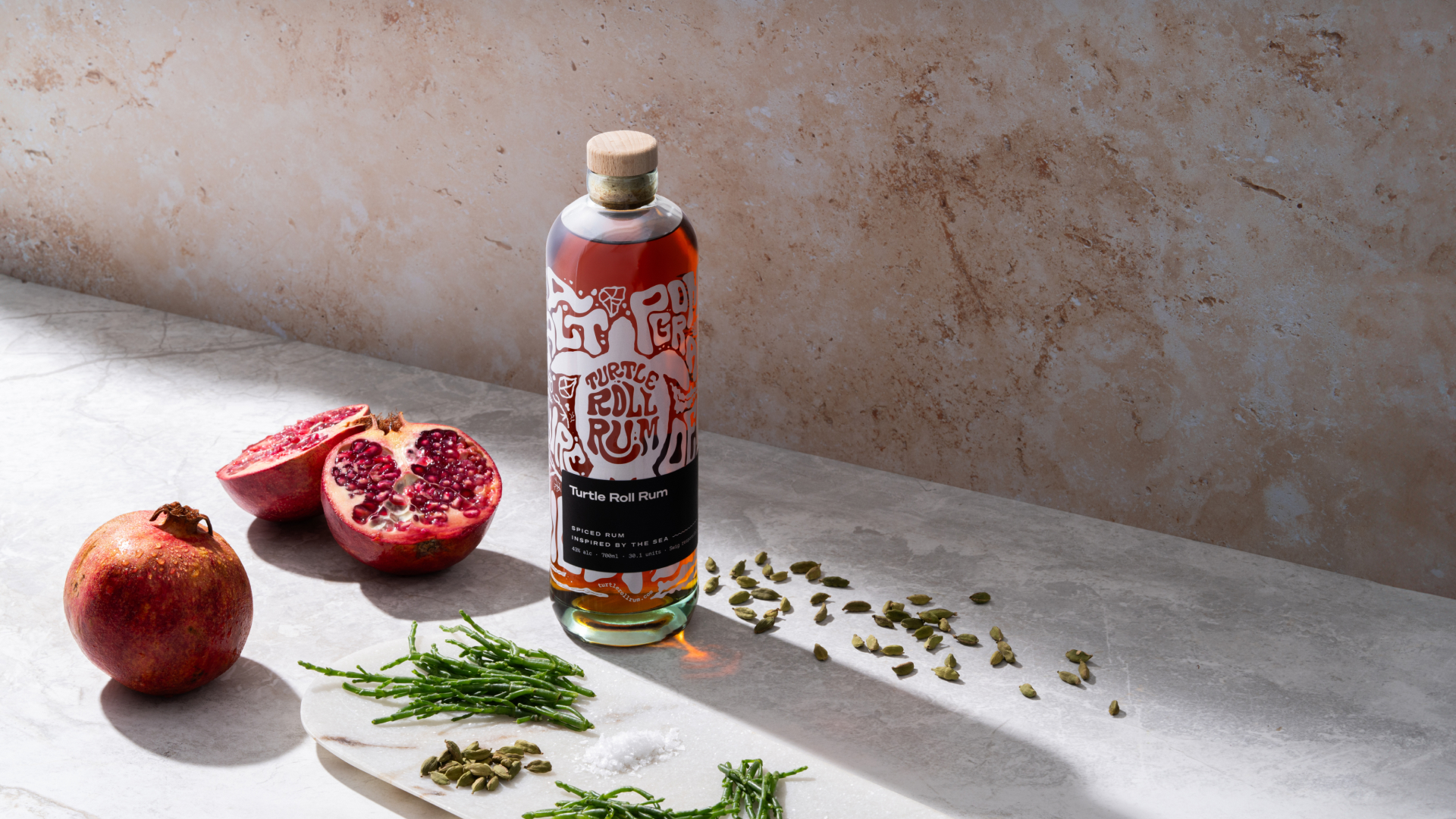
We worked with Callum Giblett at The Custom Spirit Co on the taste itself, six months of tasting, exploration and testing before we landed on the final recipe: Venezuelan, Dominican and Jamaican sugar cane, distilled on a renewable-energy production line, with notes of pomegranate, lapsang, vanilla, black cardamom and sea salt layered with oceanic botanicals, samphire and sugar kelp. Ten per cent of profits go to Project Seagrass, a charity restoring the seagrass that’s vital to ocean health, so the sustainability commitment isn’t just a claim on the label.
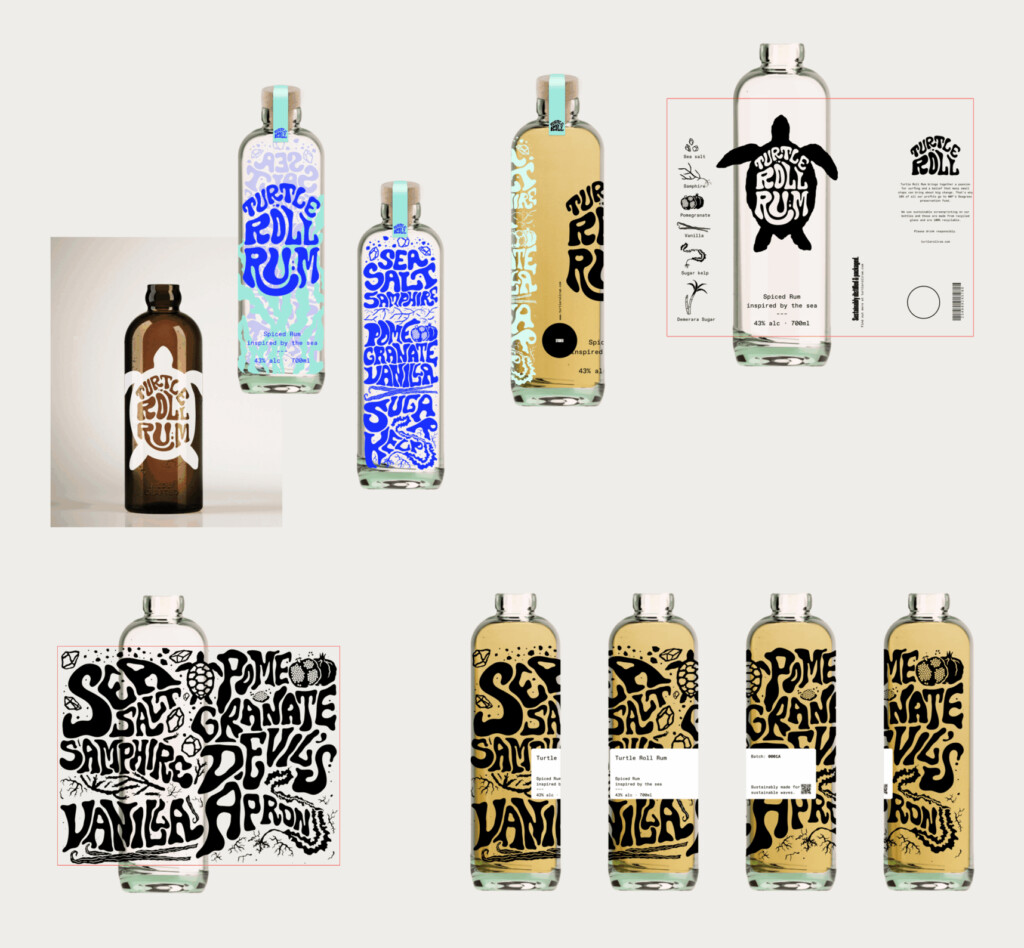
The brand identity had to carry that story without shouting about it. Our design director, Angelo Iannelli, built loose, hand-drawn lettering paired with Söhne Breitt for contemporary contrast, with illustrations distorted as if seen through water. The photography, shot by Névé Studios, leant on aqua tones and grainy, vintage surf-photo texture rather than anything glossy, closer to an 80s Miami postcard than a spirits catalogue. The tone of voice followed the same instinct: casual rather than polished, still premium, with enough ocean-inspired humour on social media to feel like a person rather than a press release.
Because Turtle Roll Rum was built to sell predominantly direct to consumer, the online experience carried more weight than it would for a brand leaning on retail listings. We built the e-commerce experience from scratch, on Gatsby hosted on Netlify, with Stripe for payments and a bespoke webhook relaying orders straight to our fulfilment partner, plus Mailchimp handling the automated emails. Every part of it had to reflect the same brand as the bottle in someone’s hand, because for a D2C brand, the website isn’t a shop window, it’s the whole first impression.
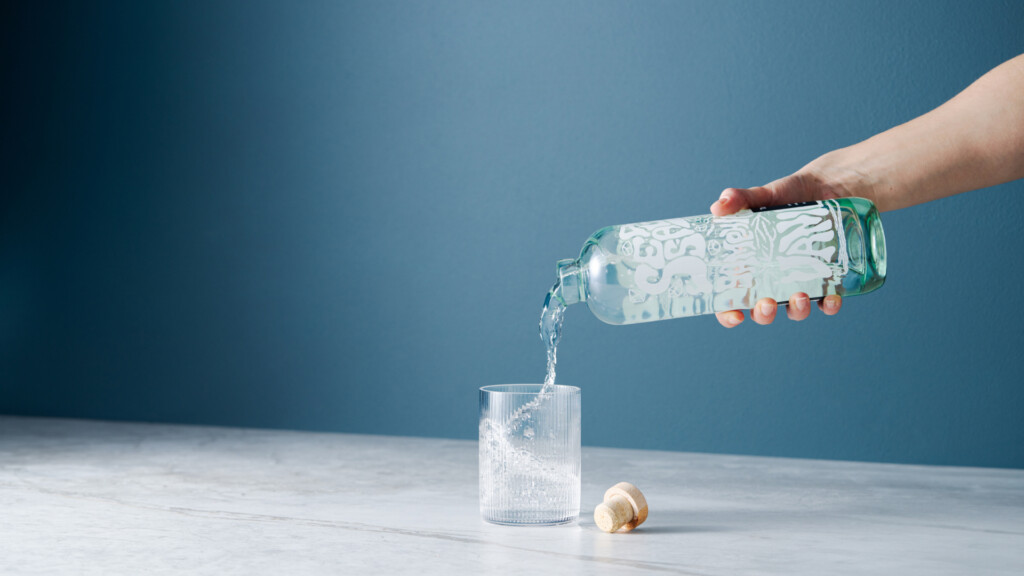
The packaging had to do the same double duty: look considered, and actually be sustainable. Each bottle is 100% recycled glass, screen printed with sustainable ink, wrapped in a recycled ECF paper label printed with soy inks, sealed with a fully compostable plant-based shrink wrap, and stopped with an activated-charcoal cork that avoids extra chemical processing. Shipping packaging is bamboo pulp rather than cardboard. We encourage people to reuse the bottle, as a water pitcher or a vase, for as long as possible before it ever reaches recycling. Merchandise went through Teemill, printed and shipped to order on organic cotton that can be remade once it’s worn out, which also meant we weren’t sitting on stock we hadn’t sold, a genuinely useful discipline when you’re the one carrying the risk rather than advising a client on theirs.
The first run was 1,200 bottles. It’s now stocked at The Cove in Tunbridge Wells, sold direct at turtlerollrum.com, and carried by a growing number of bars and restaurants across Kent and the South East, ideally somewhere near the sea.
What we learned
The thesis we wrote about in 2019 held up. Younger, values-driven drinkers really do want to know what a brand stands for before they’ll trust it, and building Turtle Roll Rum from the inside taught us things a client brief never quite can: what it actually costs to hold that sustainability promise all the way through production and packaging, not just the marketing; how much a D2C brand lives or dies on the website being right, because there’s no retailer’s reputation to lean on; and how differently you think about a decision when the commercial risk is your own, right down to choosing print-on-demand merchandise so you’re not left holding stock nobody wants.
There is more opportunity than ever before to launch new ventures, test new ideas and grow a devoted following. We know, because we’ve now done it ourselves rather than just advising on it. With the research consumers do online, and their willingness to dig into who’s actually behind the brands they buy, a brand’s digital presence has never been more crucial to its success, and building Turtle Roll Rum brought that home for us in a way no client project ever fully could.
If you’re thinking about creating and launching a new product, and want to talk to people who’ve done it with their own money on the line, get in touch.
Phil Reid